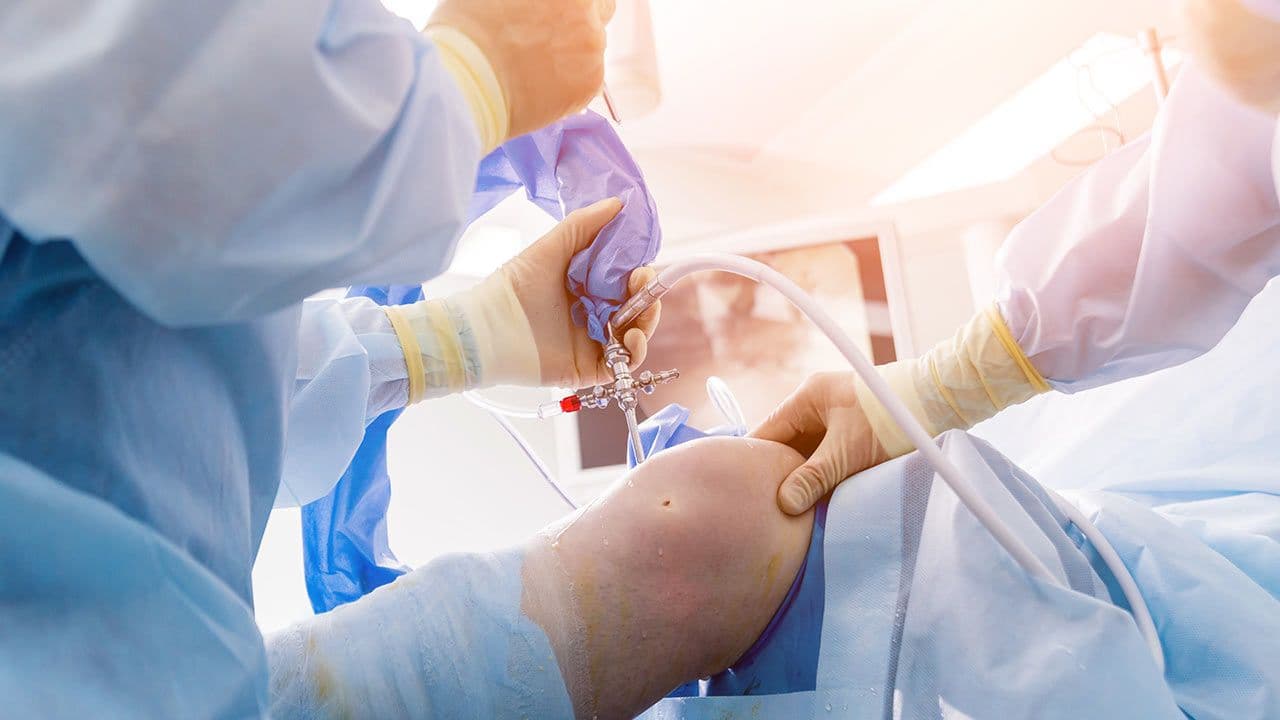
Frequently Asked Questions – Knee Arthroscopy
By Dr. Tushar Nayak | Robotic Knee Replacement Surgeon | Joint Replacement & Orthopaedic Specialist
12 min read
Knee arthroscopy is a minimally invasive way to diagnose and treat selected problems inside the knee. These FAQs explain when it is used and what recovery typically involves.
Answers below are for education and do not replace a personal orthopaedic consultation.
1. What is knee arthroscopy?
Knee arthroscopy is a minimally invasive procedure in which a small camera is inserted into the knee through a small incision to diagnose and treat selected joint problems.
2. Why is arthroscopy performed?
Arthroscopy can be used for selected problems involving the meniscus, cartilage, ligaments, loose bodies, synovium and other structures inside the knee.
3. Is knee arthroscopy a major surgery?
Arthroscopy uses small incisions and is generally less invasive than open knee surgery, but it remains a surgical procedure with potential risks and should only be performed when appropriately indicated.
4. Is arthroscopy the same as keyhole surgery?
Yes. Knee arthroscopy is commonly referred to as keyhole or minimally invasive knee surgery because it uses small incisions.
5. What knee conditions can be treated with arthroscopy?
Depending on the individual case, arthroscopy may be used for meniscus tears, selected cartilage problems, ACL reconstruction, loose bodies and certain inflammatory or synovial conditions.
6. Can arthroscopy diagnose a knee problem?
Arthroscopy allows the surgeon to directly visualise structures inside the knee. However, most patients can be diagnosed using history, examination and appropriate imaging without diagnostic arthroscopy.
7. Is MRI required before knee arthroscopy?
Not always, but MRI is frequently useful when assessing meniscus, ligament and cartilage problems and helps plan treatment.
8. Is knee arthroscopy painful?
Some pain and swelling are expected after surgery. Pain is generally managed with medication, ice, activity modification and rehabilitation.
9. How long does knee arthroscopy take?
The duration depends on the procedure being performed. A straightforward arthroscopic procedure may be relatively short, while ACL reconstruction or complex meniscus repair takes longer.
10. Can I go home the same day after arthroscopy?
Many arthroscopic knee procedures are performed as day-care surgeries, allowing patients to return home after appropriate recovery from anaesthesia.
11. Can I walk immediately after knee arthroscopy?
This depends on the procedure. Patients undergoing some arthroscopic procedures can bear weight early, whereas meniscus repair or other procedures may require protected weight-bearing.
12. How long will my knee remain swollen after arthroscopy?
Some swelling is normal after surgery and gradually decreases. The duration depends on the procedure, activity level and individual healing.
13. How soon can I return to work after arthroscopy?
Return to work depends on your occupation and the procedure performed. Desk-based work may resume earlier than physically demanding work.
14. When can I drive after knee arthroscopy?
Driving should be resumed only when you have adequate control of the leg, can safely operate the vehicle and are not taking medications that impair alertness.
15. Do I need physiotherapy after knee arthroscopy?
Physiotherapy may be recommended to restore movement, strength and function, particularly after procedures such as ACL reconstruction or meniscus repair.
16. What are the risks of knee arthroscopy?
Potential risks include infection, bleeding, blood clots, stiffness, persistent pain, nerve or blood-vessel injury and complications related to anaesthesia.
17. Can arthroscopy cure knee arthritis?
Arthroscopy does not reverse established osteoarthritis. Its role depends on the specific problem causing symptoms and should not be considered a universal treatment for arthritis.
18. Can arthroscopy treat a meniscus tear?
Yes. Selected meniscus tears can be repaired or partially removed using arthroscopic surgery.
19. Can ACL reconstruction be performed through arthroscopy?
Yes. ACL reconstruction is commonly performed arthroscopically using small portals around the knee.
20. How do I know whether I need knee arthroscopy?
The decision depends on your symptoms, examination, imaging, diagnosis, activity requirements and response to non-surgical treatment. An orthopaedic assessment is the best way to determine whether arthroscopy is appropriate.
If knee pain, instability or swelling is affecting your daily life, book a consultation with Dr. Tushar Nayak for a personalised assessment and treatment plan.